9.30.2014

Leapfrog From Disaster Symposium will radically generate and seed distinctive solutions to the challenge of today’s natural hazards

0 comments
Chicago, IL. — More people are now living in natural disaster-prone areas resulting from climate change. In 2013, over 22 million people were displaced by natural disasters, as reported and backed by the UN in the Norwegian Refugee Council’s Internal Displacement Monitoring Center (IDMC) Global Estimates. That year, category 5 Super Typhoon Haiyan in the Philippines displaced 4.1 million people alone — a million more than the combined effects experienced in Africa, the Americas, Europe, and Oceania.

Organized and led by the Royal Institute of British Architects (RIBA)-USA and Leapfrog Project including the American Institute of Architects’ AIA NY Design for Risk and Reconstruction (DfRR) and AIA International, “Leapfrog From Disaster” will be held in the Philippines on November 1 – 7, 2014 to bring together world-leading pioneers in Resilience, Architecture, and Ecology.

“Leapfrog Project’s role and potential for the Philippines is staked out, and a unique role for (Filipino) architects defined. (This) symposium will be hugely important as the one year anniversary of the disaster (Haiyan/Yolanda) approaches,” said USA Ambassador (ret) John F. Maisto, President of the US-Philippines Society.

Speakers, which include influencers in science, business, government, and the arts, as well as the delegates, will be challenged to re-invent the post-disaster paradigm, going beyond current aspirations and expectations in post-disaster rehabilitation.

“Typhoon Haiyan/Yolanda was very devastating and horrible. Having witnessed its impacts firsthand and assisted in rebuilding, I saw the tremendous amount of work going on including all the help that’s happening around the world. I’m delighted to hear of the efforts being made toward this symposium. It sounds super special, positive, innovative, and I hope it will go a long way,” shared Billy Dec, The Whitehouse, US President’s Advisory Commission on Asian Americans and Pacific Islanders (AAPI).

"It is truly an honor to be with individuals who are willing to share their resources to help rebuild our nation,” said confirmed speaker and Philippine TV personality/Trainstation CEO Carelle Mangaliag. “In this Symposium, I also get to work with an inspired new organization such as the Leapfrog Project, at the heart of building a resilient future for Philippines. Thankful for this opportunity to serve,” further comments this Rappler.com content producer.

Ultimately the Symposium aims to: Organize a genuinely collaborative post-disaster rebuilding initiative that utilizes wide-ranging local, national and international expertise, efforts, and resources to help Tacloban and its neighboring cities rebuild with resilience; Engage different schools of thought from design, science, technology and business, through interdisciplinary discourse and group activities both during and after the symposium; Birth a new school of architecture-and-design-thinking from the typhoon rebuilding efforts, which may inform future natural hazard resilience programs worldwide; Develop ecologically-friendly architectural solutions that help protect the rich biodiversity of the region and beyond.


About Leapfrog Project

Leapfrog Project was officially launched during the 2014 American Institute of Architects (AIA) National Convention and is now deployed to respond to the call of rebuilding. It is a project under the Orem Foundation, a US registered 501(c)(3) tax exempt Non-Profit Corporation.  It rallies a number of local and international partners to collaborate in helping Tacloban and its neighbouring cities rebuild with resilience, to serve as model of post-disaster reconstruction to the rest of the country and perhaps, the world.
Read full post »

7.08.2014

....... No matter who you are, what you look like, where you're from, or who you love, you were the 'IN' crowd

0 comments
The first-ever Global Inclusion Reception (EV321) of the American Institute of Architects (AIA) was held during its national convention in Chicago on June 27, 2014 at the Hafele Chicago Showroom. Here are my three takeaways from the event:
  1. It is possible for a diverse group of creative organizations to come together in fellowship.
  2. Humanitarian issues, like the most recent need for rebuilding after category 5 typhoon Haiyan (Yolanda), are global operations that require a spirit of communal unity, because no one is exempt from experiencing natural disasters.
  3. "No matter who you are, what you look like, where you're from, or who you love," architecture and design can be a profession where you are part of the 'IN' crowd.
Members of the US Whitehouse delivered enlightening and inspiring messages about diversity and inclusion, from Billy Dec who's a Presidential-Appointee to the Whitehouse Asian-American and Pacific Islanders (AAPI), to US Ambassador John Maisto...   US Ambassador John Maisto (ret) "A really great talk too Billy Dec. Inspirational -Diversity Rocks," shares Immediate Past President of the Royal Institute of British Architects (RIBA), Angela Brady PPRIBA FRIAI FRIAS FRSA FAIA FRIAC BIID Ph.D, who was in attendance. She further mentions after meeting Ambassador Maisto at the event, "It was a pleasure meeting such an enlightened man on great humanitarian issues." It was a showcase of diversity in all of its forms where official partners of the AIA Diversity and Inclusion came together for an evening of fellowship. The evening's programmed presentations were woven together by Master of Ceremonies, Kyle Hillman, that started with... AIA Diversity Council (Co-Chair): Wendy Ornelas, FAIA NOMA (National President): Kathy Dixon AIA, NOMA, LEED AP, NCARB Arquitectos (immediate Past-President): Juan Gabriel Moreno, AIA[/caption] Other multicultural professional organizations participated in celebration of diversity... Royal Institute of British Architects (RIBA)-USA (President): James Karl Fischer RIBA, AIA, PhD American Society of Interior Designers (CEO): Randy W. Fiser LA.IDEA | DC (Co-Chair): Jeannette (Gigi) Soto
LA.IDEA | DC: Juan Carlos Alvarez Tiffany C. Millner, AIA, NOMA from the AIA Diversity Council board shared the 40th Anniversary exhibit of Chicago Women in Architecture in the Chicago Architecture Foundation.[/caption] Members of the LGBT community as well as another official partner of the AIA Diversity and Inclusion, Out & Equal, transformed the Hafele showroom using multimedia and ambience that made the evening magical. Multimedia Installations by Troy Larsen[/caption] Which quickly became a hit and encouraged interaction among guests. Guests interacting with the installations.[/caption] And lastly, the celebration had a humanitarian component. Led by collaborators from the Leapfrog Project, there was a silent auction and raffle to benefit the rebuilding efforts in the Philippines after its central cities were decimated by category 5 typhoon Haiyan (Yolanda). Leapfrog Project Collaborators Melissa Sterry (Design Scientist) and Enrique Otarola (Orem Foundation) announce the winners of the silent auction and raffle. (Image credit: Chris Vaughn)

Rockit Ranch's restaurant Sunda where Billy Dec is CEO and Founder, was one of the donors to the Leapfrog Project's silent auction that night.
Some collaborators of the Leapfrog Project with Billy Dec: (L-R: Mitchell Obstfeld, Melissa Sterry, Billy Dec, Lira Luis, Enrique Otarola, Romeo Santos)

Check out the rest of the event photos. (All images and videos courtesy of Lester Scaife, unless otherwise noted.)
Read full post »

4.03.2014

How Do We Make Our Cities More Resilient? Make Them More Natural

0 comments
Scientists predict that extreme meteorological events are becoming more frequent and destructive. For instance late last year, Typhoon Haiyan, the strongest storm recorded in the world so far, decimated central island cities in the Philippines. Recent data sourced from the Japanese Meteorological Agency indicated extreme weather occurrences across the globe. These pose critical challenges to our current and future rebuilding programs in cities where extreme weather has become the new “benchmark for disaster prevention,” as suggested during a congress meeting in the Philippines by the UN Champion for Disaster Risk Reduction and Climate Change Adaptation for Asia Pacific, Senator Loren Legarda. What are the systems and strategies that can get us to resiliency?

Read more at Metropolis POV: http://bit.ly/OfOlea

A review on:
Global Innovation Science Handbook, Chapter 9 - Biomimetics: Learning from Life: Learning from Life


Global Innovation Science Handbook, Chapter 9 - Biomimetics: Learning from Life: Learning from Life

Read full post »

11.24.2013

Rebuilding as a Redefining Moment

0 comments
"For the things we have to learn before we can do them, we learn by doing them”. ~Aristotle
As an architect, most of my experiences are heavily rooted on learning from direct experience, a philosophy of education I embraced since joining Frank Lloyd Wright’s Taliesin more than sixteen years ago. At Taliesin I learned about architecture through building, using my own hands, from mixing concrete for a desert masonry wall to mimicking processes in nature as sources for design. The experience revealed the learning process as a redefining moment about the built environment particularly when we had to rebuild a wall several times due to mishaps.

A few weeks ago I came full circle with this philosophy when I participated in Thos. Moser’s Maine Event as one of eight architects and interior designers chosen to experience a condensed Customer-In-Residence Program. Thos. Moser, a company known for fine wood furniture pieces and craftsman of chairs for five living US Presidents and the Pope, teamed me up with their master craftsman, Teak, like the wood, to build a designer table worthy of being an heirloom.

Planks of Cherry wood
Building the Wing Hall Table started with selecting lumber from the stacks at Rough Mill. It was like a spectacle of spiritual specification when I handpicked the cherry lumber with the right grain pattern that would breathe life into the table. The two parallel cathedral grain patterns meeting at the middle of the plank would portray the abstractions of my parallel architectural trajectories. This would be the story it would celebrate, I told myself.

Image by Thos. Moser
When I played with the power sander like an unsupervised kid in a playground, it became a moment of reflection and repose. The master craftsman had me repeat the process of power sanding until the table surface felt almost silky smooth to touch. It made me recall that masonry wall I had to rebuild at Taliesin several times and what that meant for me as an architect. By the time we completed the table, I knew every dowel I installed in the joint intimately, and had molded the surface edge profile like a sculptor to a sculpture.


There was also an unmistakeable bond formed with my shop mates as a result of building together, which in retrospect, was also present when I built and rebuilt with the Taliesin Fellowship.

As I looked at the parallel grain patterns on the table surface, now glowing in natural luster after I airbrushed it with oil, an abstraction of images appeared in my mind. They were like ripples of water washing over land and yet the beauty of its patterns only became apparent after a heavy blow of pressurized oil against its surface. At the culmination of the crafting of this heirloom, global news spread like wildfire that the strongest storm to hit the earth made landfall in the Philippines, where I’m also licensed as an architect. It became a redefining moment with a metaphorical message that in rebuilding, there is a reason for hope, because the beauty of the unknown is waiting to be revealed, like wood grain patterns glowing in natural luster. It’s time to transform.

Instead of keeping the Wing Hall Table for my personal collection, Thos. Moser and I (in coordination with White Good) have decided to donate this one-of-a-kind signature furniture to ALLL’s upcoming crowd funding campaign that would support a rebuilding project in connection with Typhoon Haiyan.
Our upcoming rebuilding project
Wing Hall Table. Image from Thos. Moser website

Read full post »

4.22.2013

Leave No Stone and Tile Unturned

0 comments
(View original article at the Coverings Blog)

Ceramic tile has been a popular building material for over 4,000 years. It played a prominent role in the history of building construction from the oldest pyramids in Egypt to the tile mosaics of Spain. We have seen century old buildings inlaid with it, proving its longevity and strength.


Gruell Parc Trencadis by Antonio Gaudi (image by lloydi.com)

Catalan modernist architect Antonio Gaudi leveraged tile in an unconventional method in the Güell Parc project where Trencadis was ubiquitous. Trencadis (or Pique Assiette) is a mosaic technique that utilizes broken tile chards, which could possibly address some LEED credits such as Innovation in Design, Material Reuse, Recycled Content and in the case of the Güell Parc, Regional Materials, since Gaudi used discarded pieces of ceramic tiles, as well as white ceramic from broken cups and plates collected from manufacturers’ factories within its region of Esplugues de Llobregat, Spain.

As for stone, when architects and designers specify it for surface finishing, the design decisions are influenced by visual considerations derived from the stone’s patterns. The manufacturer cuts a block of stone driven by these aesthetic parameters which can be anywhere within the block. The scrap stone is then discarded and often diverted to landfill. Wojtek Rajch, president of Earth Stone Midwest in Chicago, wants to change that through his re-manufacturing company. They use marble and granite scrap cut-stone collected from shops within its locality as the “raw material” for their products. The company re-cuts and re-finishes scrap cut-stone into new shapes and sizes, for use as flooring, pavers, wall coverings, and architectural build-outs.

While Antonio Gaudi recycled ceramic from broken cups and plates, architecture firm Canon Design transformed 200,000 pounds of porcelain material from water closets at the iconic John C. Kluczynski Building by Mies van der Rohe, into clean modern-looking tiles covering 57,000 square feet. This innovation in design was a result of the relationship between the architect (Canon Design) and the manufacturer (Crossville, Inc.) within the framework of the manufacturer’s tile-recycling program called “Tile Take Back”. Crossville, Inc. has developed this proprietary system of processing ceramic and porcelain tile back into powder used in manufacturing new tile. When architects lead these types of conversations, such as the case of Cannon Design, and involve themselves in the early planning stages of custom tile production, then the project likely results in exceptionally meeting the client’s basis of design and the project’s design objectives.
A project by Michael P Johnson<br />
Image courtesy of Michael P Johnson<br />
Photo: Bill Timmerman, Timmerman Photography, Inc.
Finding the right product for a project is equally important as finding the right manufacturer to work with on a project. A designer’s idea is only as good as the products he/she specifies as well as how the manufacturer executes this idea.” This is clearly evident in the projects Yoder Residence, Wilkinson Office Warehouse Reconstruction, McCue Residence, Bradley Residence, and Ellsworth Residence, by Michael P. Johnson, the first American to win Italy’s prestigious 11th International Aldo Villa Award .
A project by Michael P Johnson<br >
</div>
Image courtesy of Michael P Johnson

Johnson’s work on the Bradley and Ellsworth residential projects in particular, have earned him the Italian Trade Commission’s coveted Legend Award. He will be sharing his insights on best practices while working on these projects, at Coverings 2013 together with Lira Luis at the Georgia World Congress Center in Atlanta.

A project by ALLL<br />
Sketches by Lira Luis<br />
Images courtesy of Habitile

Recent advancements in tile have allowed designers more opportunities for creativity and pathways to ecological thinking. This is exactly what architecture firm ALLL in Chicago, led by Lira Luis, is aiming for in its Living Wall System project. In collaboration with Habitile’s Aurora Mahassine, the Living Wall System project is an attempt to analyse the environmental, social, and economic dimensions of buildings to reiterate eco-systemic performance and of the urban ecosystem to provide habitat, food, and energy within the topographies of developing countries and reinhabitation of industrialized ones. This could be a model that can be replicated elsewhere. Luis will be presenting this project, currently in its earliest stages of development that experiments with tile, for the first time, at their Coverings presentation.

Meanwhile, Tile of Spain manufacturer, Ceracasa in collaboration with the Institute of Chemical Technology from Pol. University of Valencia and the Environmental Studies Centre of the Mediterranean (CEAM), have produced the Bionic tile. It is a porcelain tile that can purify air and destroy harmful nitrogen oxides (NOx) that are emitted during the combustion process from vehicular and industrial pollution.


New technologies continue to disrupt the Tile & Natural Stone Industry and they are not without skeptics as well as reluctant adopters. In a recent Twitter communication with Patti Fasan, first woman to receive the prestigious Joe Tarver award of the National Tile Contractors Association, she posed an important question that architects and designers need to address as far as the underlying hesitancy to adopt emerging technologies in a profession that thrives on innovation: How can architecture adopt existing innovation (in Tile & Natural Stone) faster in the USA?


We must leave no stone and tile unturned when it comes to seeking and using new materials for the advancement of architecture and design.


Read full post »

1.04.2013

A year in review: Let's talk about Design

0 comments
Happy new year everyone! The best is yet to come as far as new things happening in our world and in the architecture world at large. We are excited! One of the highlights of the past year was when OREM interviewed Lira Luis to discuss the Value of Design. It has reached nearly 54,000 views worldwide. Take a look:
Read full post »

12.21.2012

The Twelve Days of Christmas with Architects: Day 10

0 comments
On the tenth day of Christmas, by a cove there to see,
ten LED Lightings

Alegra Restaurant. Photo from retail design blog


Restaurant in Singapore. Photo from yupiu


Photo from aliimg


Photo from vizualizeus


Photo by fibreled


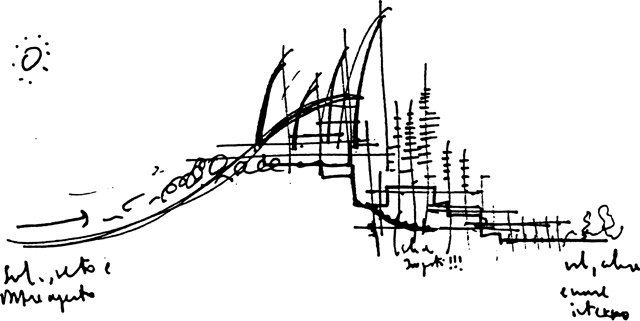
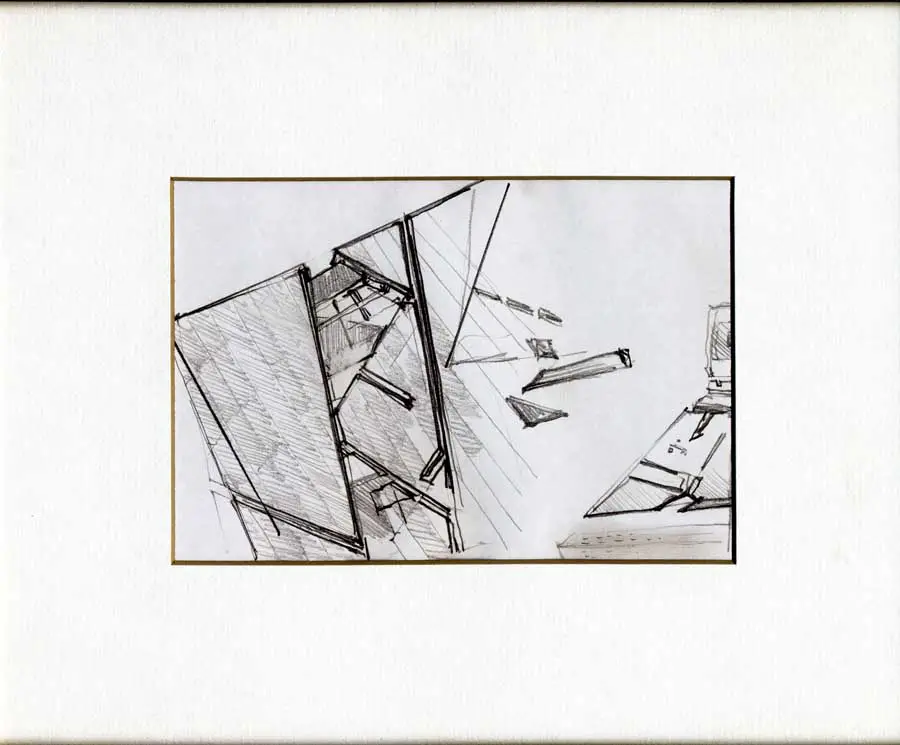
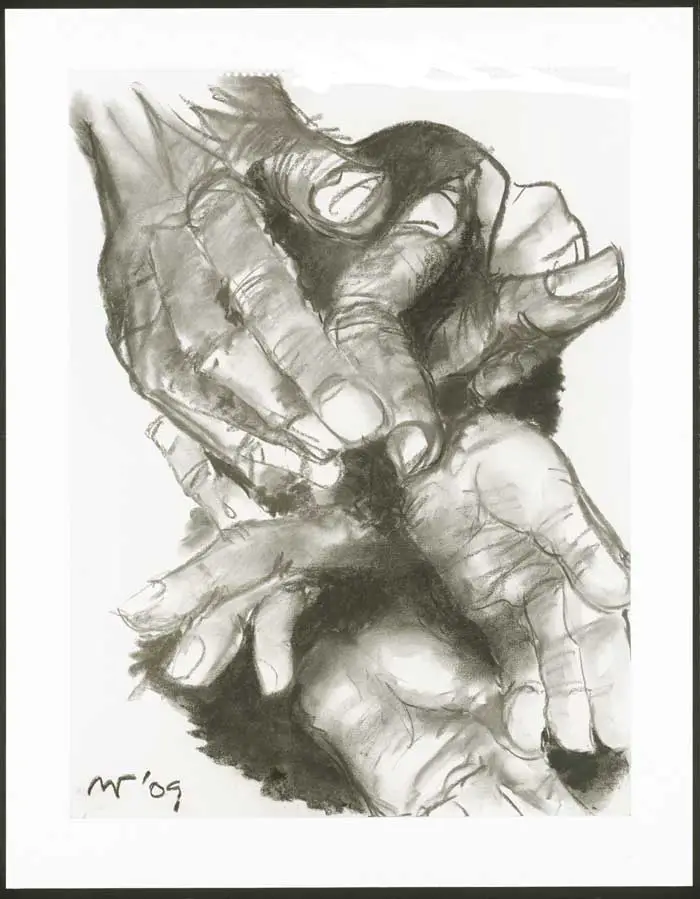
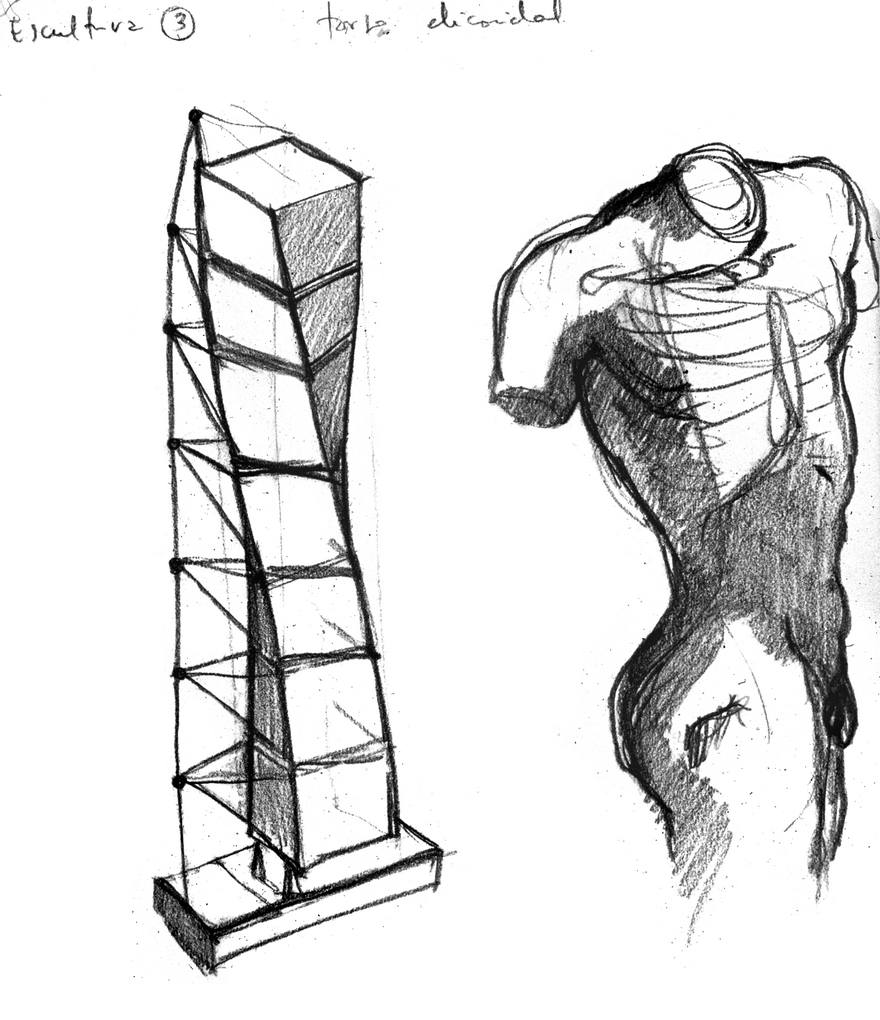
nine Hand-drawn Sketching,

Sketch by Renzo Piano. Image from pritzker.com
Sketch by Daniel Libeskind. Image from e-architect.co.uk
Sketch by Tadao Ando. Image from e-architect.co.uk
Sketch by Rafael Vinoly. Image from e-architect.co.uk
Sketch by Santiago Calatrava. Image from archidialog
Sketch by Frank Lloyd Wright. Image from artinfo
Sketch by Norman Foster. Image from demic
Sketch by Zaha Hadid. Image from e-architect.co.uk
This is my own sketch. I did this during the time when I was living at Taliesin in Spring Green, WI. Circa 1997. Image courtesy of Atelier Lira Luis, LLC. See more by clicking this link.


eight Edgy Buildings,
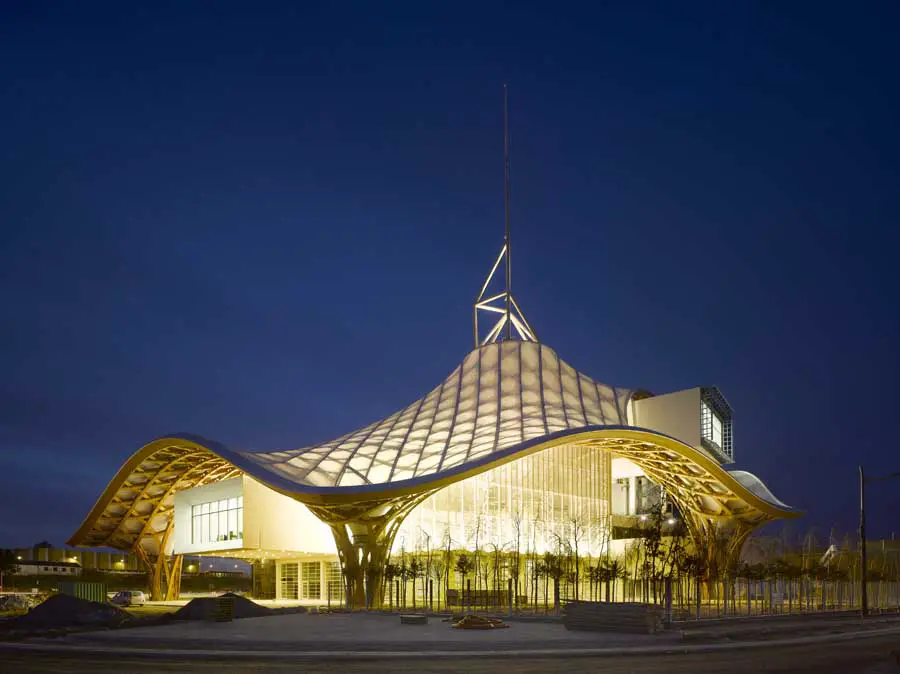
Centre Pompidou France by Shigeru Ban and and Jean de Gastine Architectes with Gumuchdjian Architects
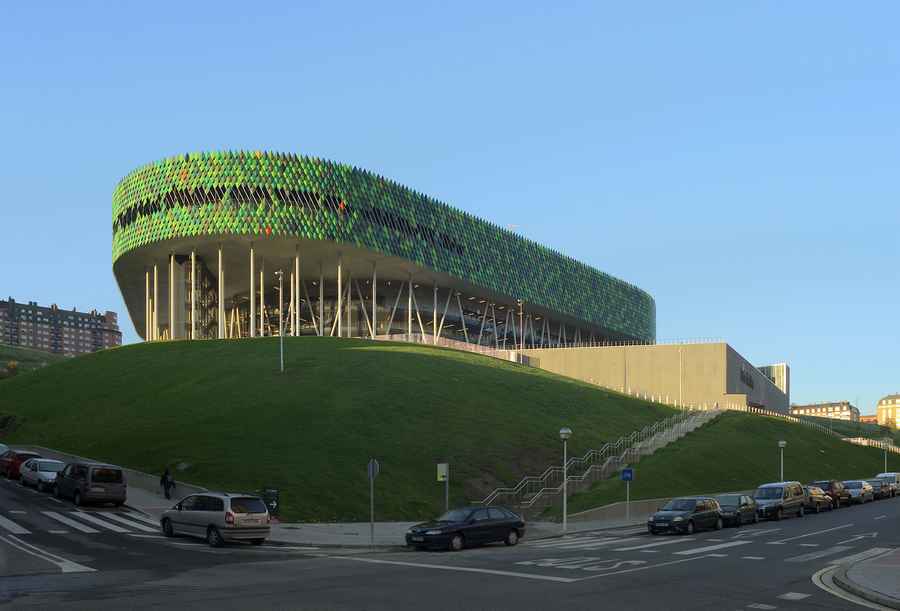
Bilbao Arena by Idom UK. Photo from e-architect
New York by Frank Gehry. Photo from smartbomb
Turning Torso by Santiago Calatrava. Photo from arcabhijeet
Maxxi by Zaha Hadid. Photo from arcspace
CCTV by Rem Koolhaas. Photo from architecture.about
Oslo Opera House by Snohetta
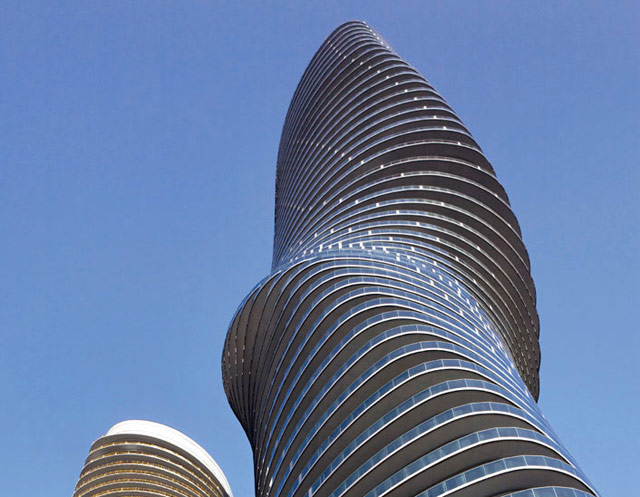
Absolute Towers by MAD Architects. Photo by also.kottke


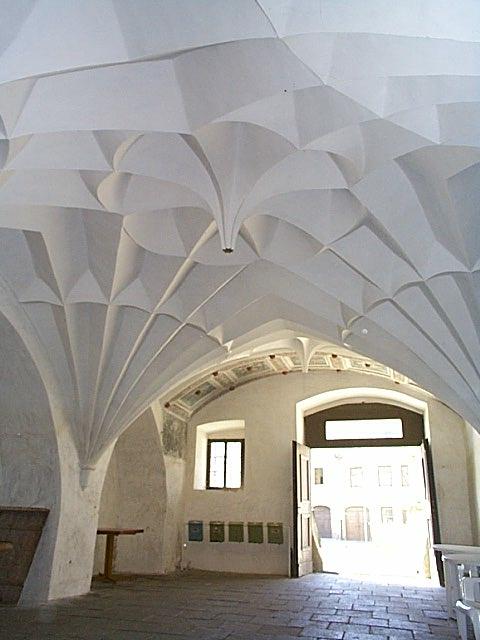
seven Modern Ceilings,
Ceiling design by Office dA. Photo from Lostateminor.com
Photo from Demagz.com
Ceiling design by Liam Hopkins. Photo from Homedcr.com
Ceiling design by Richard Rogers. Photo from Chictip.com
Ceiling design by Source. Photo from Chictip.com
Ceiling design by Aidlin Darling Design. Photo from Chictip.com
Ceiling design in Slavonice. Photo from Hoary.org


six Archi Sayings,  

"Life is very fleeting. It’s important to be gentle and optimistic. We look behind and think what we’ve done in this life has been good. It was simple; it was modest. Everyone creates their own story and moves on. That’s it. I don’t feel particularly important. What we create is not important. We’re very insignificant." 

-  Oscar Niemeyer

"When I am working on a problem I never think about beauty. I only think about how to solve the problem. But when I have finished, if the solution is not beautiful, I know it is wrong."

-  R.Buckminster Fuller

"A great building, in my opinion, must begin with the unmeasurable, must go through measurable means when it is being designed and in the end must be unmeasurable.”

-  Louis Kahn

"Architecture has always been as much about the event that takes place in a space as about the space itself."

-  Bernard Tschumi

"Never talk to a client about architecture...He will not understand what you have to say about architecture most of the time."

-  Mies van der Rohe

"A great architect is not made by way of a brain nearly so much as he is made by way of a cultivated, enriched heart."

                                                                                                - Frank Lloyd Wright
five Wall Claddings,
Designwall™ 1000 by Kingspan. Boston Convention Center building by Rafael Vinoly Architects PC. Photo from Kingspan website.


Parklex Timber Cladding by Parklex. Vantone Center building in Tianjin, China. Photo by Nathaniel McMahon.
Porcelanosa Butech Products and Ventilated Facade Systems. Photo by Porcelanosa Butech.
Ceramic Tiles of Italy's Energy-efficient Exterior Porcelain Facades. Wilkinson Office/Warehouse building by Michael P. Johnson. Photo courtesy of Michael P. Johnson.
NOW Cladding by Crossville. Los Gatos library in California by Noll & Tam Architects. Photo from Architizer website.


four Architects,
"The Modern Architecture Game". It is a board game produced by Next Architects where players
"can test their knowledge about the (four) greatest architects, their famous buildings, and legendary quotes as they make their way around the board to win the game." Photo from Materialicious. (Pictured from left to right: Frank Lloyd Wright, Rem Koolhaas, Le Corbusier, and Mies van der Rohe)


three Black Pens,


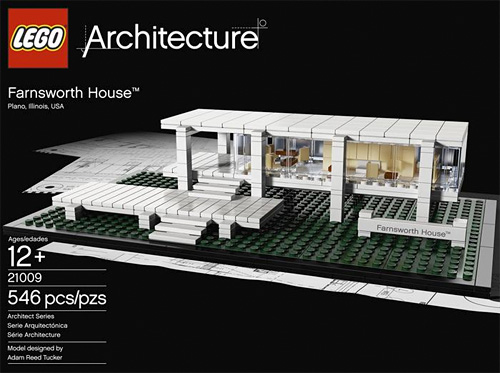
two Lego Sets,
Fallingwater Lego Set. Photo from Lego website.


Farnsworth House Lego Set. Photo from Lego website.

and mold Plywood for an Eames Tree.

Christmas tree made by molding plywood chair legs by Charles and Ray Eames.
Circa 1946. Photo from Library of Congress website.
Read full post »

Popular Posts


Creative Commons License
Architecture Meets Life by Atelier Lira Luis, LLC (ALLL) is licensed under a Creative Commons Attribution 3.0 Unported License.
Based on a work at http://www.liraluis.com.

Copyright © Architecture Meets Life Design by Free CSS Templates | Blogger Theme by BTDesigner | Powered by Blogger